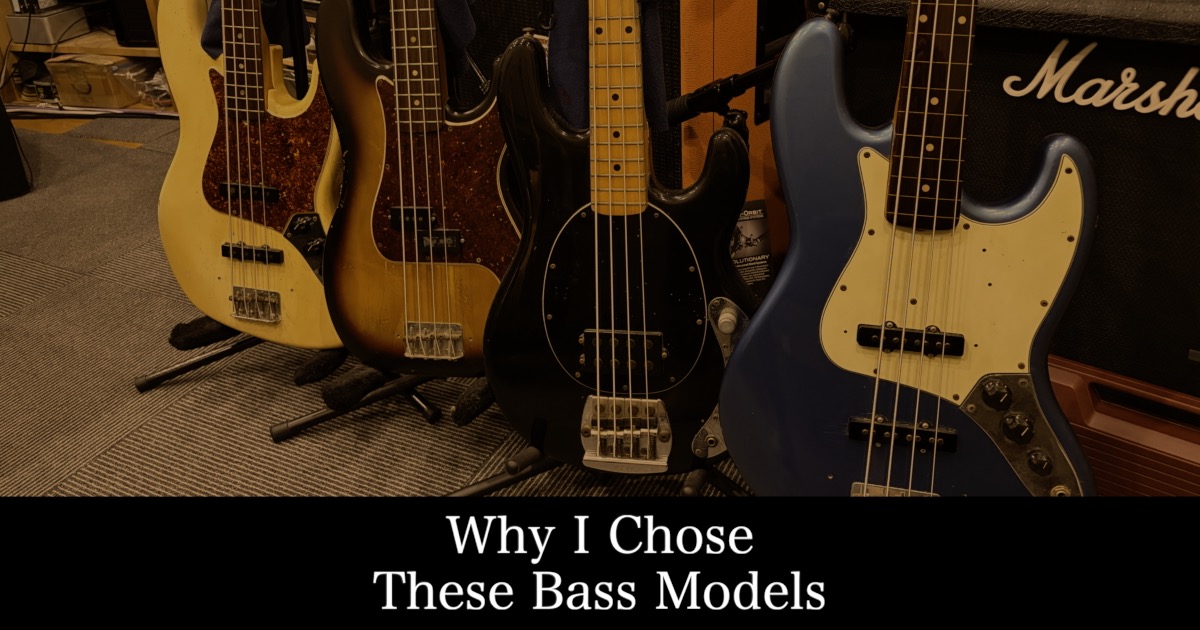
FuruBass currently includes four bass models:
A vintage Jazz Bass, a vintage Precision Bass, a Music Man-style active bass, and a fretless bass.
These were not random choices.
I focused on basses that are widely used, musically versatile, and have clearly different personalities.
At the same time, I wanted them to come from instruments I personally know and trust.
These models are all based on basses I actually own and regularly use.
Of course, they each have their own distinct sound and role.
You can hear those differences in the demo videos, so I won’t go too deeply into tone comparisons here.
What mattered more to me was consistency.
Even though the sound changes, the core MIDI layout and playability remain familiar across all FuruBass instruments.
There’s a reason for that.
When I record bass for real sessions, I often switch between instruments depending on what best fits the song.
Sometimes a Jazz Bass feels right.
Sometimes the weight of a Precision Bass works better.
Other times, an active bass or fretless brings the character the track needs.
I wanted FuruBass to work the same way.
The ideal was simple:
Take the same MIDI performance, load a different instrument, and immediately hear a different musical perspective.
Not by rewriting the performance —
But simply by choosing a different bass, just like in a real recording session.
At the same time, I didn’t want the instruments to feel identical.
So beyond the shared layout, each model includes unique features and characteristics that reflect the personality of the real instrument behind it.
Among the many basses I’ve owned over the years, these are the ones I trust the most.
And I hope FuruBass can become something similar for the people who use it.