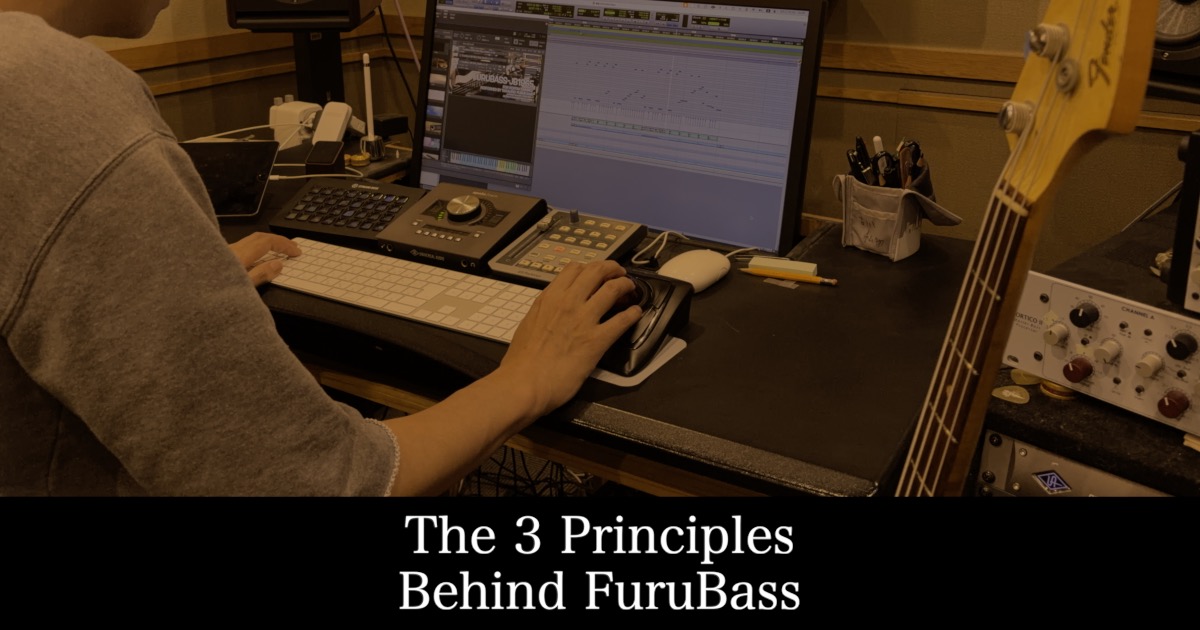
When designing FuruBass, I had three goals in mind.
- Fast and lightweight performance that never interrupts inspiration
- A sound quality that satisfies even a real bassist
- Easy programming that keeps creativity flowing
Every FuruBass instrument is designed around these three principles.
1. Why Lightweight Performance Matters
Modern sample libraries often require a huge amount of memory.
While that can allow for incredible detail, it often comes at a cost: long loading times and slower workflow.
I’ve experienced many moments where inspiration started fading while simply waiting for an instrument to load.
My ideal bass instrument is simple:
Open it instantly. Start writing immediately.
That’s why FuruBass is designed with a streamlined sample structure that loads quickly and stays lightweight.
I also wanted to reduce the time spent tweaking sounds.
Many bass instruments require choosing bass models, amp simulations, cabinet settings, and more before you can even begin.
Sometimes that flexibility is useful.
But sometimes you simply want a sound that already works.
That’s why I created BaMix — a ready-to-use tone that blends DI bass with a miked bass amp in a balanced way.
A sound designed to sit naturally inside a mix from the moment you open it.
2. What “Bassist-Approved Sound” Means to Me
For years, I’ve studied bass tone both as a bassist and as a producer.
Not only how bass should sound on its own — but how it should function inside an actual song.
Over time, I refined my own recording approach through experimenting with basses, amplifiers, DI signals, microphones, and mic preamps.
Those sounds became part of countless productions I worked on.
Since my original idea behind FuruBass was:
“I wish there were a bass instrument that sounded like my bass.”
I sampled FuruBass using the exact same recording philosophy I use in real sessions.
The same instruments.
The same recording mindset.
That became the foundation of BaMix.
At the same time, I didn’t want users to feel locked into one sound.
So FuruBass also includes separate DI and amp tones for those who want deeper control.
3. Why Easy Programming Matters
A lightweight instrument only helps if it’s also fast to use.
That’s why I made a clear decision:
No key switches.
Instead of interrupting workflow, many common bass articulations are designed to happen naturally.
For example:
- Stronger velocity can trigger slap pulls or slide articulations
- Ghost notes and glissando variations are placed in intuitive key ranges
- Mod wheel and sustain pedal assignments handle additional performance options
The goal was simple:
Spend less time managing the instrument — and more time making music.
I also paid close attention to how phrases feel when programmed.
Even simple mouse-based MIDI programming can sound musical if the instrument responds naturally.
That’s something I care deeply about as someone who programs bass lines every day.
What I Chose Not to Include
There’s another design philosophy behind FuruBass:
Leaving things out on purpose.
Bass is an instrument that supports the foundation of a mix.
Once drums, guitars, keyboards, vocals, and other instruments are added, some ultra-detailed elements simply become difficult to hear.
Because of that, I intentionally avoided adding features that would significantly increase system load without making a meaningful musical difference in real productions.
Things like excessive string-noise behavior or ultra-specific string-selection systems.
Instead, I prioritized what I personally value most:
Speed, musicality, and inspiration.